
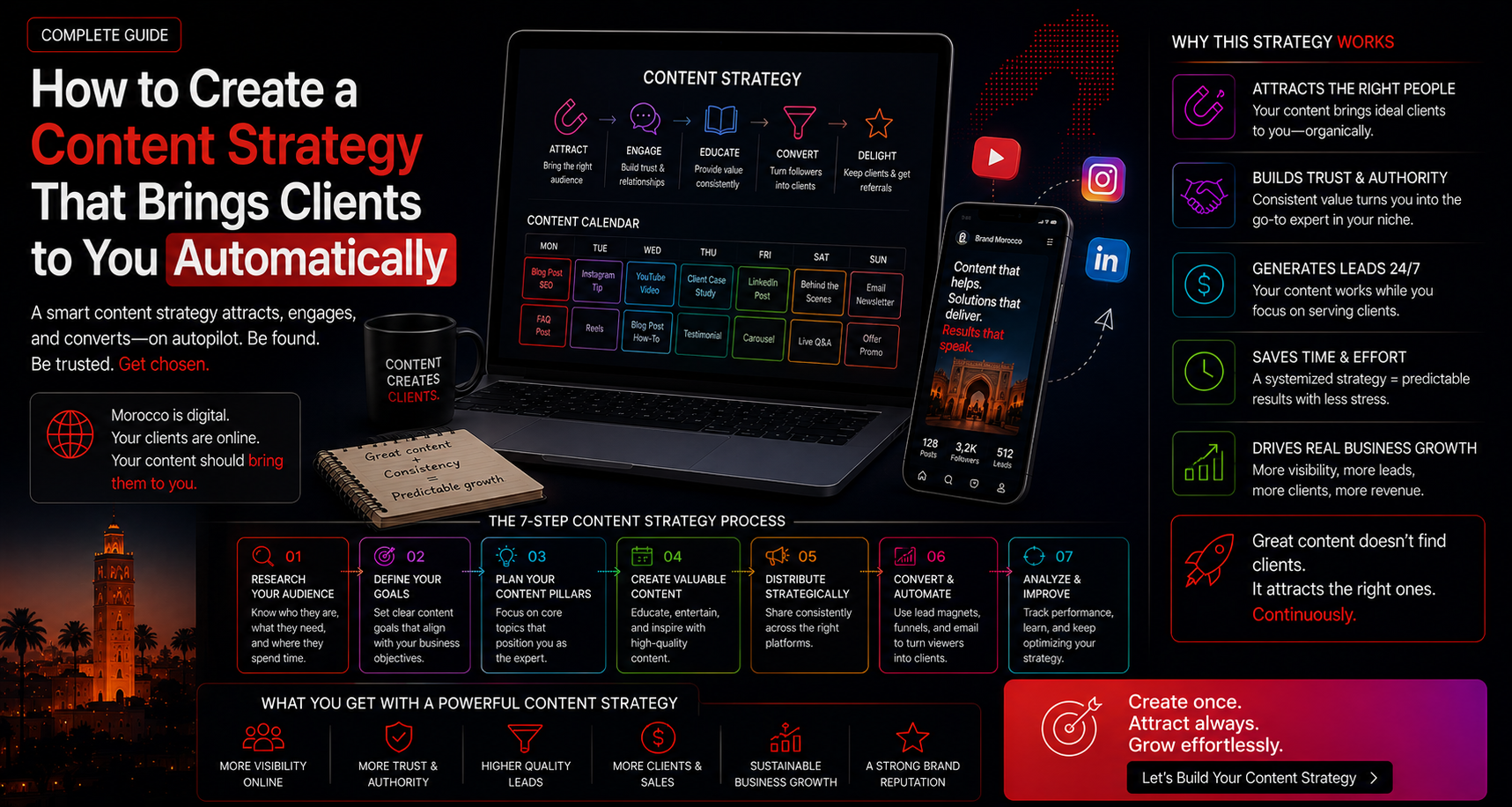
The best marketing doesn't chase clients — it attracts them. A properly built content strategy turns your brand into a magnet that pulls in exactly the right people at exactly the right moment. Here's how to build one from scratch.
Most businesses approach content reactively — posting when they have time, writing about whatever feels relevant that week, measuring success by likes rather than leads. This approach produces inconsistent results at best and wasted effort at worst.
A real content strategy is a deliberate, structured system built around a single goal: creating such a clear and valuable presence around your area of expertise that when potential clients need what you offer, they already know, like, and trust your brand. This guide shows you exactly how to build that system.
Step 1: Define Your Content Strategy Foundation
Before writing a single word or recording a single video, three strategic questions must be answered with precision. Who exactly are you trying to reach — not just demographic data but the specific problems, aspirations, and language of your ideal client? What topics can your brand own authoritatively — areas where your genuine expertise gives you something valuable to say? And what action do you want content to drive — email signups, consultation requests, direct sales?
These answers become the filter through which every content decision is made. Without them, you're creating content for an undefined audience with no defined destination.
Step 2: Choose Your Content Pillars
🏛️ What Are Content Pillars?
Content pillars are the 3-5 core topic areas your brand consistently creates content around. They should directly intersect with your expertise and your audience's most pressing questions. For a marketing agency in Morocco, pillars might include brand strategy, digital advertising, video production, and market trends.
🎯 Why Pillars Matter
Consistent focus on specific topics builds topical authority — both with search engines and with human audiences. Brands that publish consistently on the same relevant topics get recognized as the go-to source in their niche, which is exactly the positioning that generates inbound client inquiries.
Step 3: Map Content to the Buying Journey
👆 Top of Funnel — Awareness
Content for people who don't know they need you yet. Educational blog posts, social media tips, short explainer videos. Goal: get discovered by the right people and build initial trust.
🤔 Middle of Funnel — Consideration
Content for people evaluating their options. Case studies, comparison guides, behind-the-scenes content, detailed how-to content. Goal: demonstrate expertise and begin differentiating from alternatives.
✅ Bottom of Funnel — Decision
Content for people ready to choose a partner. Testimonials, portfolio showcases, transparent pricing guides, free consultation offers. Goal: remove remaining hesitation and convert interest into action.
Step 4: Build a Realistic Publishing System
The biggest content strategy failure point is ambition without infrastructure. Committing to daily content with no production system collapses within weeks. A sustainable system for most Moroccan businesses looks like this: one long-form piece per week (blog post or video), three social media posts derived from that long-form piece, and one email newsletter per month synthesizing the month's key insights. This cadence is achievable, builds consistent presence, and compounds in value over time.
Step 5: Measure What Actually Matters
Vanity metrics — likes, follower counts, impressions — feel good but don't pay the bills. The metrics that matter for a content strategy built around client acquisition are: organic search traffic growth month-over-month, email list growth rate, consultation requests attributed to content discovery, and time-on-page for key content pieces. These metrics tell you whether your content is actually moving people toward becoming clients.